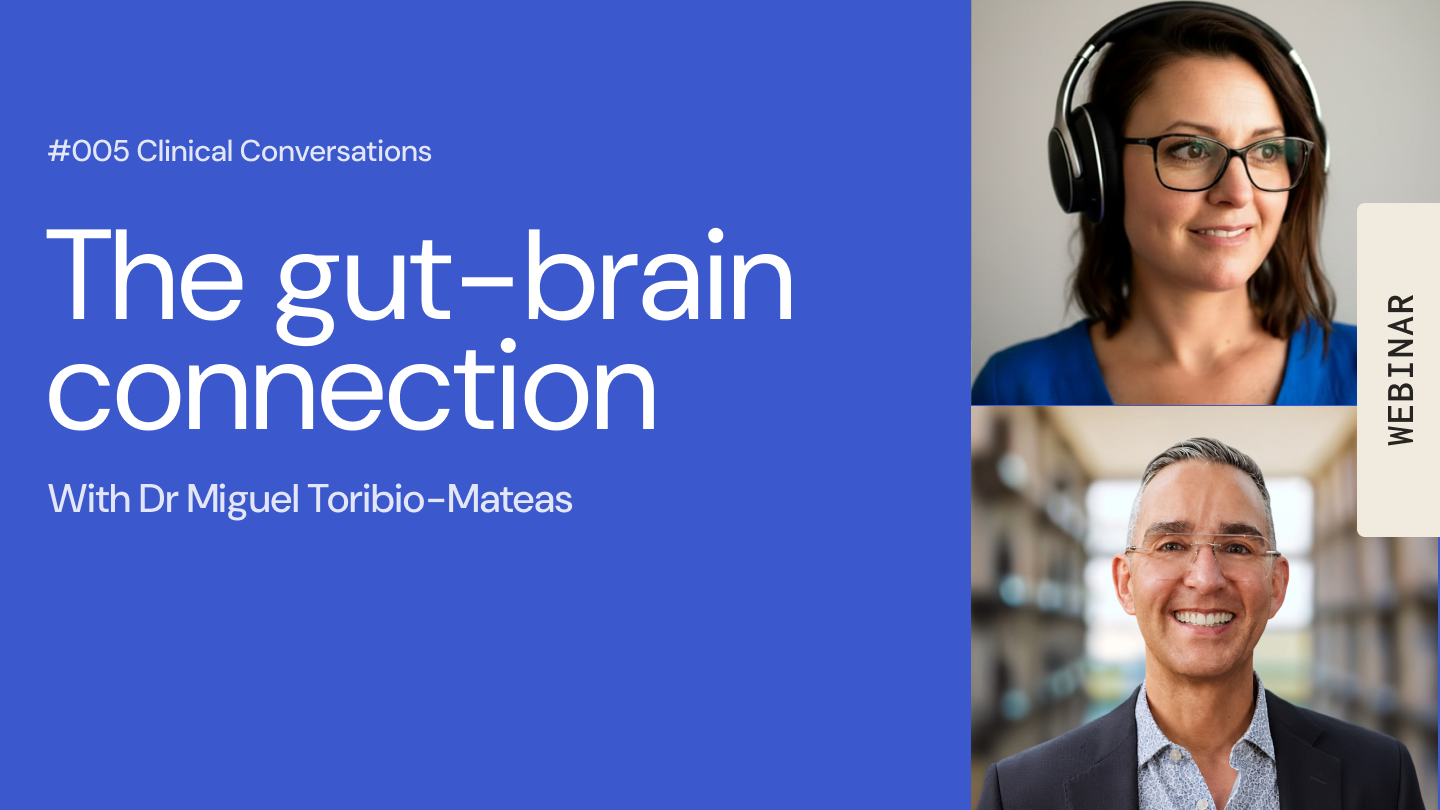
The gut-brain axis is one of the most exciting areas in microbiome science, but its clinical value depends on careful interpretation. In this webinar, Dr Miguel Toribio-Mateas will explore how healthcare practitioners can use microbiome testing to support clinical reasoning around mood, cognition, stress, inflammation and gut-brain communication.
Drawing on clinical neuroscience, nutrition science and applied microbiome research, Miguel will examine key microbial patterns, including diversity, short-chain fatty acid production, gut barrier integrity, immune signalling and microbial metabolites. The session will translate the evidence into practical nutrition and lifestyle strategies, including fibre diversity, fermented foods, polyphenols, prebiotics, probiotics, postbiotics and synbiotics.
Rather than treating microbiome results as a standalone answer, this session will show how they can be understood as part of a wider clinical picture, helping practitioners move from data to meaningful, personalised care.
Learning objectives
By the end of this webinar, participants will be able to:
- Describe the main biological communication pathways involved in the microbiota-gut-brain axis, including immune signalling, microbial metabolites, short-chain fatty acids, gut barrier function, vagal pathways and neuroendocrine stress responses.
- Interpret key microbiome patterns relevant to gut-brain health, including microbial diversity, fibre-fermenting capacity, short-chain fatty acid producers, potential inflammatory signatures and opportunistic microbial patterns, while recognising the limitations of current evidence.
- Explain how microbiome testing can support clinical reasoning when integrated with symptoms, dietary patterns, stress physiology, medication history, digestive function, sleep, mood and wider lifestyle context.
- Evaluate the current evidence for microbiome-focused nutrition strategies, including dietary fibre, microbiota-accessible carbohydrates, fermented foods, polyphenols, probiotics, prebiotics, postbiotics and synbiotics, in relation to mental health, cognition and stress resilience.
- Identify practical nutrition and lifestyle interventions that may support microbial diversity, gut barrier integrity, immune balance and gut-brain communication in real-world clinical practice.
- Communicate microbiome findings to patients in a balanced and accessible way, avoiding overclaiming while helping clients/patients understand what their results may suggest and what evidence-informed next steps may be appropriate.
Meet your speaker